MESSAGING ANALYTICS
Sakari Analytics gives you clear visibility into message volume, spend, delivery trends, opt-outs, and errors across your account so you can identify issues, improve delivery, and optimize campaigns.

PERFORMANCE SNAPSHOT
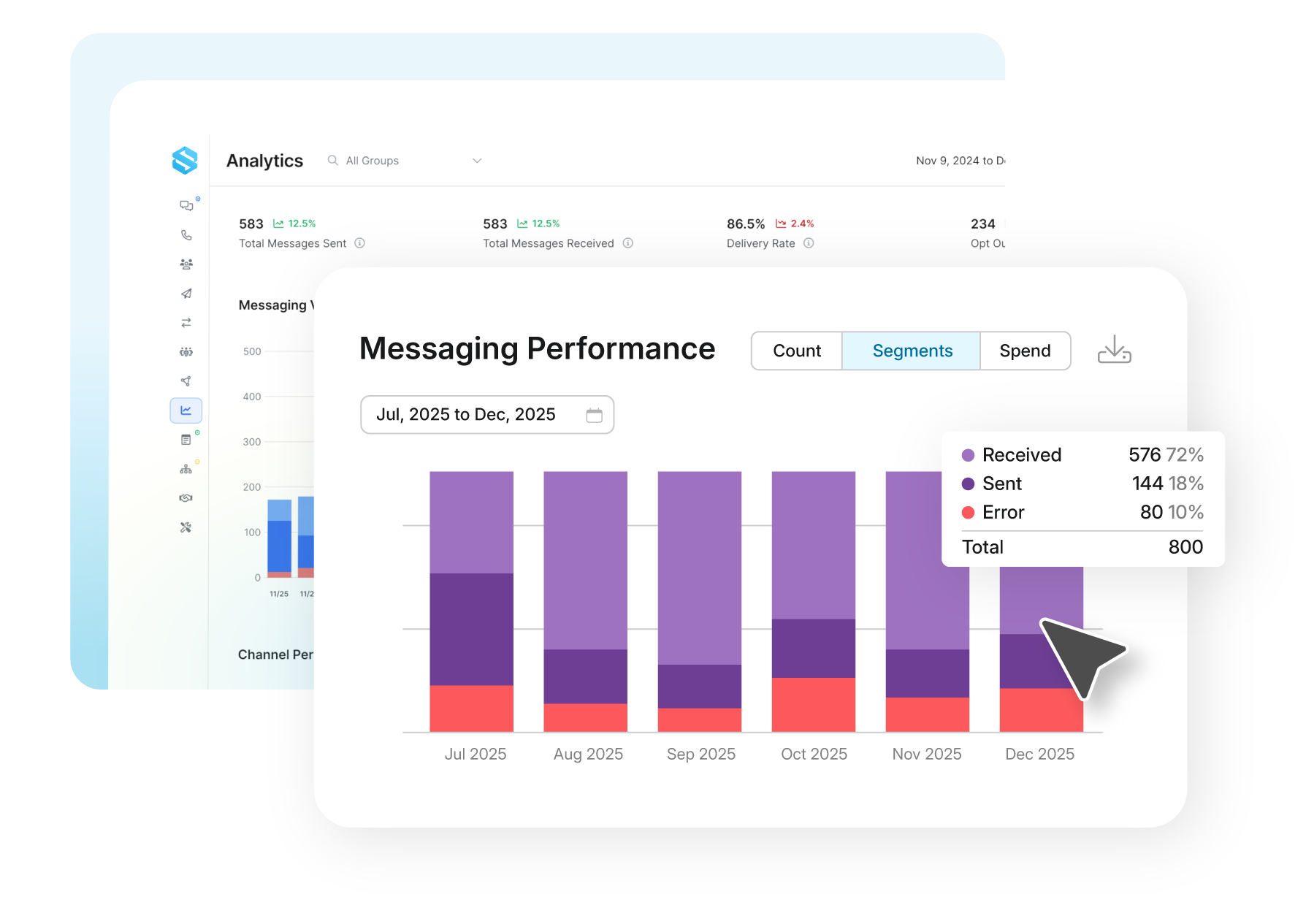
Instantly view total messages sent and received, delivery performance, and opt-out rates with clear comparison indicators against previous periods. A single snapshot gives teams immediate visibility into messaging health without digging through reports.
VOLUME AND SEGMENT TRENDS
Track messaging volume across customizable date ranges with daily, weekly, monthly, or yearly views. Toggle between message counts and segments to understand campaign activity, identify spikes, and monitor trends across groups or numbers.
SPEND AND ERROR DIAGNOSTICS
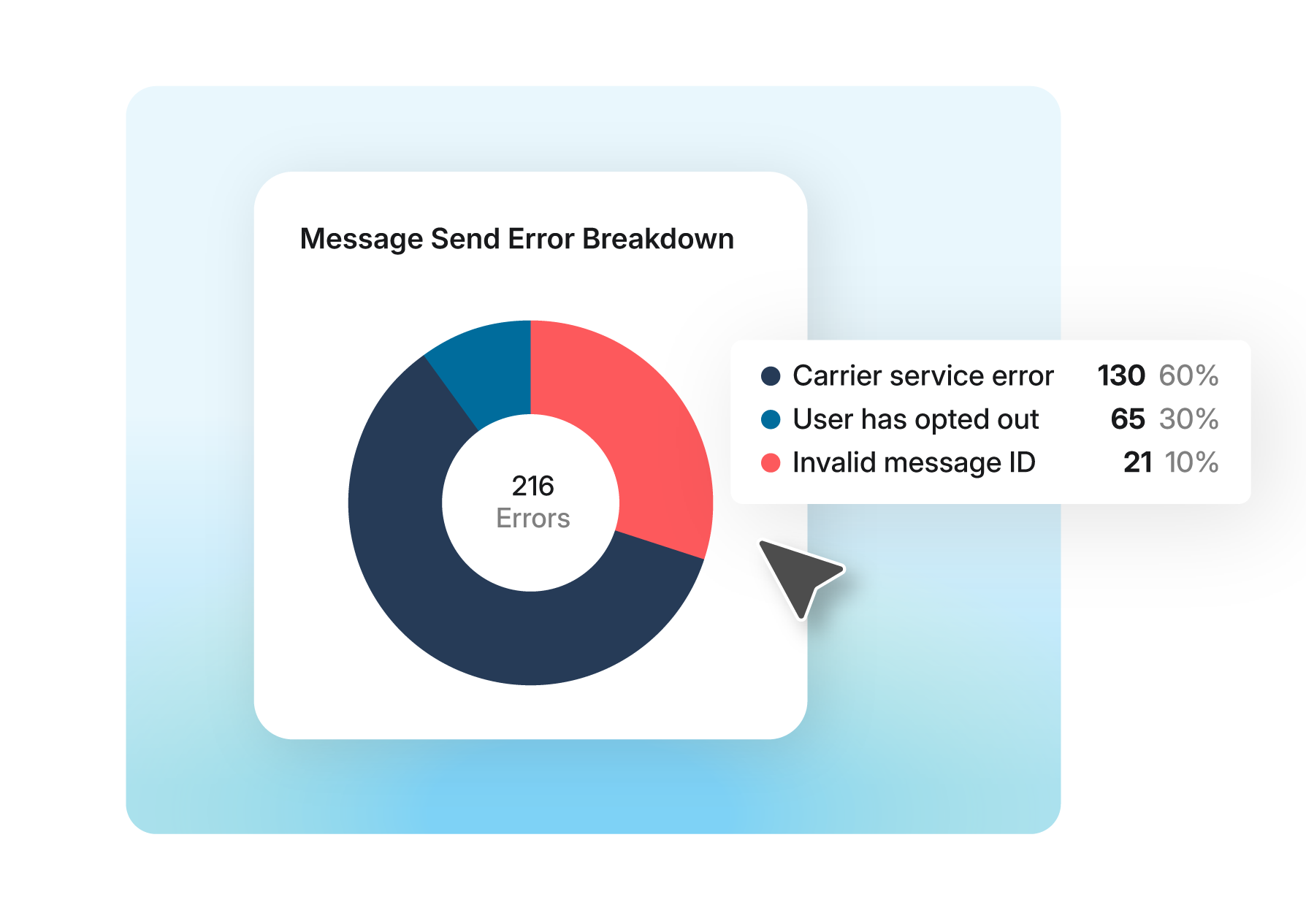
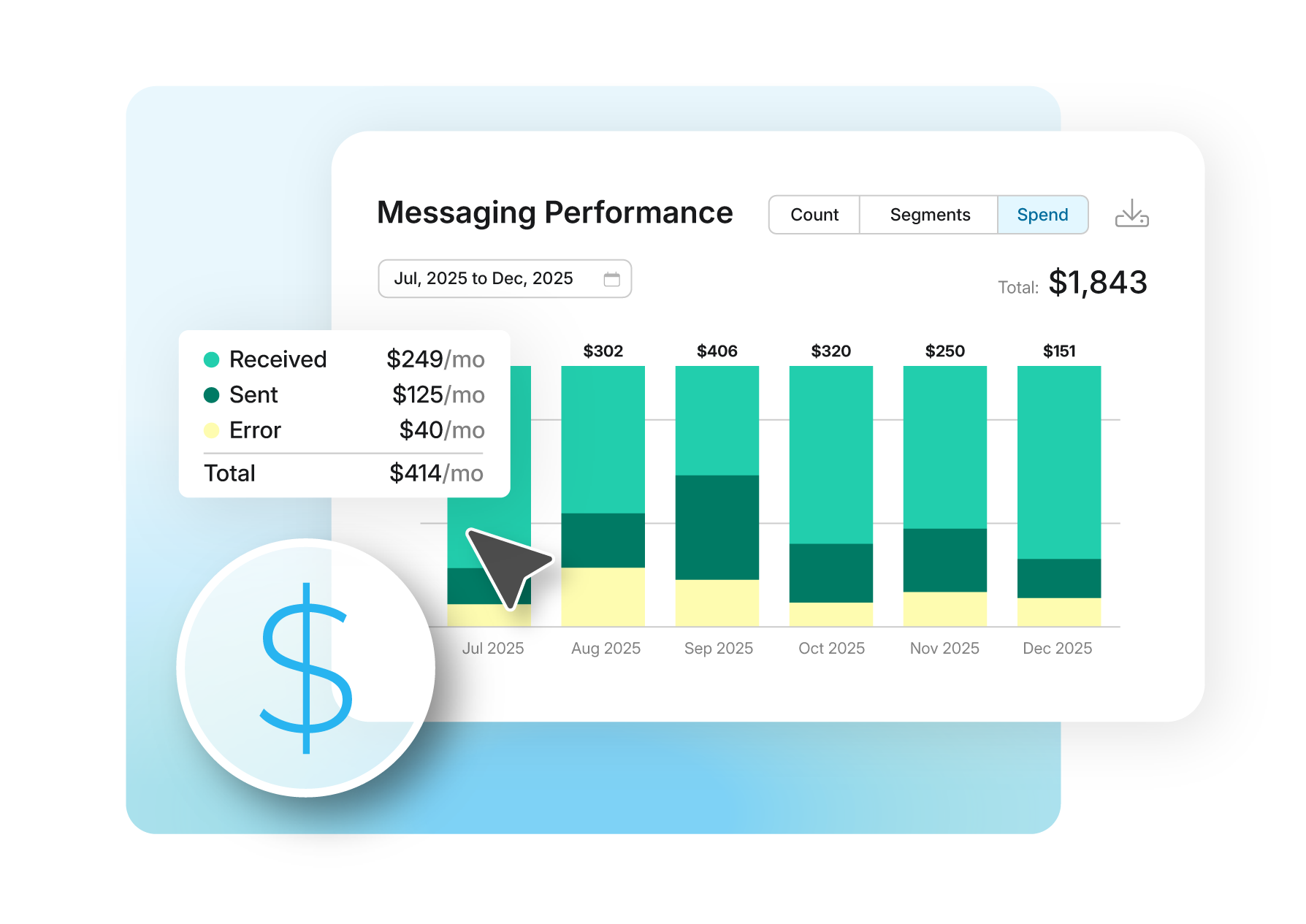
Monitor messaging spend over time while drilling into error categories to identify delivery issues such as carrier rejections or compliance blocks. Clear cost visibility and structured error reporting help teams maintain performance and control.
GLOBAL MESSAGING INSIGHTS
Visualize sent, received, and error volume across countries with an interactive, global heat map built for scale. Intensity-based coloring and detailed breakdowns help teams quickly identify trends, monitor regional performance, and spot delivery issues worldwide, all from a single, unified view.
Analyze structured error reasons including carrier rejections and compliance-related blocks to quickly identify patterns and improve delivery health.
Try it Free

Export structured reports instantly or receive detailed message-level data by email, all reflecting your selected date range, group, or phone number filters.
Get Started
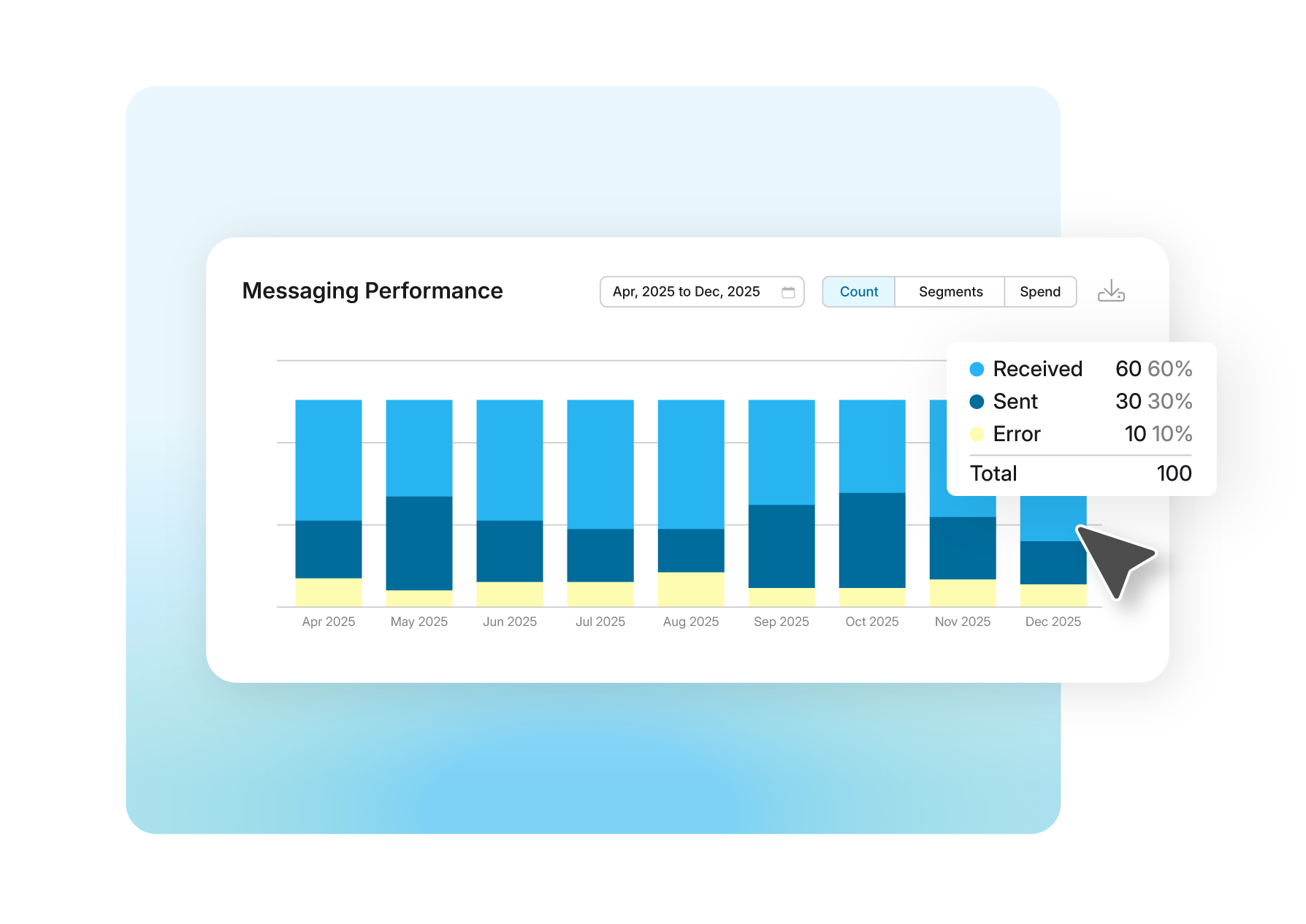
View messaging volume across customizable date ranges with daily, weekly, monthly, or yearly granularity. Quickly spot spikes, seasonality, or unusual changes across your account, groups, or numbers.
Free Trial
Analyze structured error reasons including carrier rejections and compliance-related blocks to quickly identify patterns and improve delivery health.
Try it Free
Export structured reports instantly or receive detailed message-level data by email, all reflecting your selected date range, group, or phone number filters.
Get Started
View messaging volume across customizable date ranges with daily, weekly, monthly, or yearly granularity. Quickly spot spikes, seasonality, or unusual changes across your account, groups, or numbers.
Free TrialOPERATIONS & COORDINATION
“Once it was up and running, it was really simple. We were off and running almost immediately.”
James
Workforce Optimization Manager, Safelite
Connect your tech stack with native integrations and flexible API access. Quickly scale communications globally, reduce friction and accelerate every customer’s journey.
Learn MoreThe Resource Hub

SMS marketing analytics provide visibility into how text message campaigns perform by tracking delivery rates, engagement metrics, costs, and errors across your messaging activity. Instead of sending messages blindly, analytics show which campaigns drive results and where delivery or engagement issues occur.
Comprehensive SMS analytics track multiple performance dimensions including message volume sent and received, delivery success rates and failure reasons, opt-out patterns, messaging costs over time, and link tracking across different customer campaigns.
Sakari's SMS marketing analytics dashboard provides instant performance snapshots showing total messages sent, delivery percentages, error rates, and cost trends without requiring manual report generation. Filter data by date ranges, phone numbers, contact groups, or campaigns to identify patterns and diagnose issues quickly.
The platform automatically categorizes delivery errors by type (carrier rejections, compliance blocks, invalid numbers) so teams can address root causes rather than just seeing generic failure counts. This structured error reporting helps businesses maintain high delivery rates by identifying and fixing systemic issues.
Analytics become essential as messaging volume scales. Businesses sending hundreds or thousands of messages need visibility into what's working, where money is being spent, and which issues require immediate attention versus minor anomalies.
Effective SMS analytics focus on metrics that indicate campaign health and business impact rather than just message counts.
Delivery rate: The percentage of messages successfully delivered to recipient phones. Healthy SMS programs maintain 95%+ delivery rates. Drops below this threshold signal issues requiring investigation like list quality problems, compliance violations, or carrier filtering.
Error breakdown by category: Understanding why messages fail matters more than just knowing failure counts. Track carrier rejections, opt-out violations, invalid numbers, and compliance blocks separately to address specific issues rather than generic delivery problems.
Messaging spend over time: Monitor costs relative to volume to identify unexpected increases, understand budget consumption patterns, and forecast future messaging expenses. Tracking spend helps businesses stay within budgets while scaling campaigns appropriately.
Opt-out rates: The percentage of recipients unsubscribing after receiving messages indicates campaign relevance and targeting quality. Rates above 1-2% per campaign suggest messaging frequency, targeting, or content problems requiring adjustment.
Volume trends across segments: Compare messaging activity across different customer groups, campaigns, or phone numbers to identify which channels drive the most activity and where engagement concentrates. This helps allocate resources effectively.
Response patterns: Track reply rates and link click activity to measure actual customer engagement beyond just delivery. High delivery with low engagement signals messaging that reaches phones but doesn't resonate with recipients.
Sakari's analytics automatically surface these metrics in real-time dashboards rather than requiring manual report compilation. Teams can spot problems immediately and adjust campaigns before issues compound across large message volumes.
SMS analytics help diagnose delivery problems by categorizing errors, showing patterns over time, and identifying which segments or numbers experience issues.
Error categorization: Sakari breaks delivery failures into specific categories including carrier service errors (network-level rejections), user opt-outs (compliance-related blocks), and other structured error types. This categorization points directly to root causes rather than generic "delivery failed" messages.
Trend analysis: Viewing error rates over time reveals whether issues are isolated incidents or growing problems. A sudden spike in carrier rejections might indicate content filtering, while gradually increasing opt-outs suggest messaging frequency problems.
Segment-specific filtering: Filter analytics by groups, phone numbers, or campaigns to isolate where problems occur. If errors concentrate in specific segments, the issue likely relates to that audience or campaign rather than platform-wide problems.
Geographic patterns: Global messaging analytics show performance across countries, helping identify region-specific delivery issues, carrier problems in specific markets, or compliance variations requiring different approaches.
Cost correlation: Monitoring spend alongside error rates helps identify expensive mistakes like repeatedly attempting delivery to invalid numbers or continuing campaigns with high rejection rates that waste budget without results.
Comparative analysis: Compare current performance against previous periods to establish normal baselines and identify anomalies. Knowing your typical 96% delivery rate makes a drop to 85% immediately obvious and actionable.
This diagnostic approach turns analytics from passive reporting into active problem-solving. Teams identify issues quickly, understand causes, and implement fixes before delivery problems impact large campaigns or waste significant budget.
Yes, SMS analytics platforms provide filtering and segmentation capabilities that allow businesses to analyze performance across different campaigns, customer groups, phone numbers, and time periods rather than just viewing aggregate data.
Campaign-level tracking: Monitor individual campaign performance including delivery rates, engagement metrics, and costs specific to each messaging initiative. This helps identify which campaigns perform well versus which need optimization or discontinuation.
Contact group analysis: Compare analytics across different customer segments to understand how messaging performs with various audiences. Service businesses might analyze residential versus commercial customers separately, while retail companies compare VIP customers versus general subscribers.
Phone number performance: Businesses using multiple phone numbers for different purposes (customer service, marketing, transactional notifications) can filter analytics by number to understand how each channel performs independently.
Date range comparisons: Flexible date filtering enables period-over-period analysis. Compare this month's performance to last month, analyze quarterly trends, or examine year-over-year growth in messaging activity.
Multi-dimensional filtering: Combine filters to answer specific questions like "How did our promotional campaign perform with VIP customers in California during November?" rather than settling for generic overall statistics.
Export capabilities: Download filtered reports for specific segments, campaigns, or time periods to share with stakeholders, include in presentations, or analyze in external tools. Reports export in seconds rather than requiring manual compilation.
Sakari's analytics include these filtering capabilities in the standard dashboard without requiring custom report requests or waiting for scheduled reports. Teams access the exact data they need immediately rather than sifting through irrelevant aggregate statistics.
SMS analytics drive campaign optimization by revealing what works, identifying problems early, and providing data for strategic decisions about messaging frequency, targeting, and content.
Identify high-performing approaches: Analytics show which campaigns achieve the best delivery rates, engagement, and conversion metrics. Businesses can then replicate successful patterns across other campaigns while discontinuing underperforming approaches.
Optimize send timing: Track engagement patterns by day and time to identify when customers respond most frequently. Shift campaign scheduling to high-engagement windows for better results without changing message content.
Improve list quality: Error analytics reveal how many delivery failures result from invalid numbers or opted-out contacts. Regular list cleanup based on these metrics improves delivery rates and reduces wasted spend on undeliverable messages.
Budget allocation: Cost analytics show which campaigns and segments consume the most budget relative to results. Redirect spending from expensive low-performers to cost-efficient high-performers for better overall ROI.
Compliance monitoring: Track opt-out rates and compliance-related errors to ensure messaging programs respect customer preferences and maintain legal compliance. Rising opt-outs signal the need for frequency adjustments before problems escalate.
Proactive issue resolution: Real-time analytics alert teams to delivery problems while campaigns are active rather than discovering issues post-facto. Quick identification enables immediate corrections that salvage campaign performance.
Stakeholder reporting: Structured analytics provide concrete data for reporting messaging program performance to leadership. Demonstrate ROI, justify budget requests, and show program growth with actual metrics rather than anecdotal evidence.
Strategic planning: Historical trends inform decisions about scaling messaging programs, entering new markets, or adjusting overall communication strategies based on what data shows actually works rather than assumptions.
Sakari's real-time analytics dashboard enables continuous optimization rather than waiting for periodic reports. Teams make data-driven decisions daily, improving performance incrementally over time through consistent monitoring and adjustment.